
Meet the Butchers – Stephen Hinett and Dan Tanner
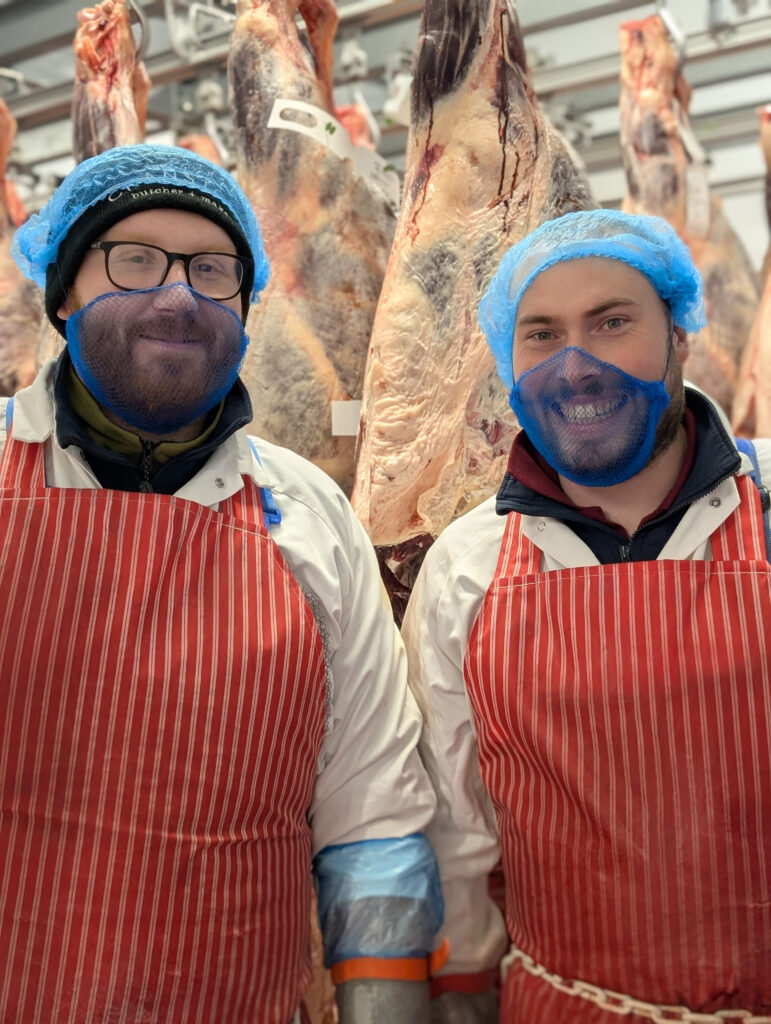
We sat down at Café Oswalds, above the Cumbrian Food Hall in Penrith, with Stephen Hinett – Cranstons Master Butcher and Meat Buyer, and Dan Tanner – Butchery Apprentice, to talk about their journeys into butchery, their apprenticeships at Cranstons, and the care and expertise that goes into every cut of beef they prepare.
Q: Where are you from originally?
S: Birmingham. My mum and dad moved up here when I was 14, when I went to Ullswater School. Living here was a very different way of life than I was used to!
D: I’m Penrith born and bred. I went to Ullswater too… but a good few years later!
Q: What did you want to be when you were younger?
S: I wanted to get into plumbing or be an electrician. Mostly I just wanted a trade behind me.
D: Plasterer. I also wanted a trade – if you have a trade, you always have that job security. Now I’m working my way to being a butcher, so I’m on track to having a trade!
Q: How did you get started in work, and how did that lead you to your role at Cranstons?
S: My first job was as a Pot Wash in the Food Hall when I was 15. From there, I applied to be a butchery apprentice, completed my apprenticeship here, and progressed to become a butcher. I’m now a Cranstons Master Butcher and Meat Buyer, which is a role I really enjoy. I’ve been here over 20 years, so it’s really shaped my career.
D: I started working on the Fruit and Veg aisle at Morrisons and later on night shift before leaving in 2017. I saw an advert for a role in the High Care Department in production at Cranstons about 4 years ago, and not long after was offered a butchery apprenticeship – I haven’t looked back since.
Q: What first drew you into the world of butchery?
S: I’ve always loved meat. Honestly, when I started the apprenticeship, I thought I’d get sick of it eventually, but it’s never happened. If anything, it’s made me appreciate it more.
D: Being given the opportunity to retrain was huge for me. I’ve always liked a good steak, and I was excited to learn everything behind it.
Q: How has butchery training and apprenticeship changed over the years?
S: Apprenticeships have changed a lot since I started. Back then, I didn’t bone out a hindquarter for the first four years, whereas now it’s something apprentices learn fairly early on. Passing down the right skills quickly helps maintain high standards and ensures new butchers can handle everything confidently. Knowing where the cuts come from on a carcass is really important, and knife safety is something apprentices need to master early.
D: The apprenticeship has been really hands-on. Over the past year, I’ve learned to bone out whole hindquarters and handle a wide range of cuts, which has given me confidence in maintaining the quality that customers expect. I’ve also learned how to work efficiently without compromising standards, understanding how each step – from trimming to portioning – affects the final product. Knife safety has been a big focus for me too.
Q: What’s been the trickiest cut to master, or a memorable skill you’ve learned along the way?
S: The first time I worked on sirloin and ribeye really stuck with me. It felt like the hardest skill to learn because the meat is so valuable – you don’t want to make a mistake.
D: I practiced sirloins quite a few times on a loin of pork to get the hang of it. But the trickiest cut I’ve worked on has to be silverside. It’s made up of three parts with gristle running through the middle, so you’ve got to cut right down without splitting the skin.
Q: Describe your typical day.
S: Each day is different, and that’s what keeps it interesting. One day we might be boning out beef, another it could be pork, or preparing gas-flushed products. Alongside that, there’s the important job of getting shop orders ready. Every cut has to be done with care and precision – the skill is in knowing how to get the best from each animal, whether that’s sirloin, ribeye, or a perfect roasting joint.
D: We also have trimming days, and days that are more about forequarters and hindquarters of beef. Fridays are always busy, getting everything ready for the weekend. There’s a big focus on hygiene too – we’re constantly washing our hands, wearing PPE, and making sure everything stays clean. At the end of the day we strip down the machines and clean all the knives before the hygiene team come in to do the walls, floors and surfaces.
Q: Why is whole carcass butchery important, and what does ‘doing it properly’ mean to you?
S: Whole carcass butchery is about respect for the animal – using every cut so nothing goes to waste. Doing it properly means trimming carefully to get the most from each cut and keeping standards high, especially with beef during the dry-aging process. It has to be perfect every time.
D: It’s also about really knowing your meat. You need to understand where each cut comes from and what you can get from it. Doing it properly means being consistent, making sure every piece meets the same high standard, and giving customers confidence in what they’re buying.
Q: What makes beef such a special part of butchery, and what do customers often overlook about it?
S: The time that’s put into it, and the dry aging. There are so many different cuts, the choice is endless. Maturing the meat on the bone makes a big difference to taste and quality. Many people don’t realise that not all beef is the same. It’s not just about what happens in the shop – it starts on the farm. The animal’s diet, the way it’s treated, and making sure it isn’t stressed before slaughter all affect the flavour and texture of the meat. Once it arrives here, it has to be handled carefully and matured for a minimum of 21 days in the right environment.
D: Customers often don’t see the effort that goes into getting beef just right. Dry aging isn’t as simple as putting it in a fridge for three weeks – you have to control everything, from temperature and humidity to how it’s handled day-to-day. Every cut has to be trimmed and prepared properly, and even small details can affect the flavour or tenderness.
Q: What’s your go-to way of cooking a great steak, and do you have a favourite product from the counter?
S: Griddle pan, high heat. I never have a sauce with my steak, it shouldn’t need it. My favourite product from the counter is Korean BBQ Sausage – great flavour, a really nice balance.
D: Same for cooking – plenty of salt and pepper, and the closest I’ll get to a sauce is garlic butter. I love the Topside and Cheddar Burger – the topside is dry aged and has fantastic flavour, the sharpness of the cheddar and the lift from the tomato chutney, can’t beat it.
Q: If you could only eat one cut of meat for the rest of your life, what would it be?
S: Lamb Henry – slow roasted shoulder on the bone with all the trimmings.
D: Bacon – nothing beats a bacon sarnie in the morning.
Q: What’s the biggest lesson you’ve learned from working together, and how would you describe your relationship in production?
S: Dan listens and takes everything on board straight away – he’s very keen to learn. Overall, everyone gets on really well. We work hard, but we still manage to have a laugh.
D: Stephen has the patience to go through something 100 times if you need it. There’s a good work relationship and a real sense of camaraderie. I actually knew Stephen before I started here, which made settling in a bit easier, but everyone made me feel welcome right away.
Q: What do you enjoy doing outside of work, and where’s your favourite place to spend time locally?
S: I love walking my Cockapoo, Annie, on the fells – especially around Buttermere. It’s beautiful and one of my favourites for fresh air.
D: I enjoy walking too, along with meeting friends, going to the pub, and watching the rugby. Buttermere’s my top pick as well – stunning, quieter than other places, with a good pub at the end.
Quick fire round
Steak pie or sausage roll?
S: Steak pie
D: Steak pie
What’s one thing people might be surprised to learn about you?
S: That I’m from Birmingham but don’t like UB40. They were very overplayed when I was growing up, you’d hear them everywhere.
D: People are always surprised that I like spicy food – really spicy food.
Favourite sandwich filling?
S: Roast Beef + Horseradish
D: Chicken and Bacon
Favourite pub order?
S: Any kind of real ale
D: Guinness
First gig or concert you went to?
S: Alien Ant Farm
D: White Buffalo
Pineapple on pizza — yes or no?
S: Yes
D: No
BBQ or Sunday roast?
S: Roast Lamb… But I do love a BBQ
D: Roast Beef
What’s your go-to karaoke song?
S: Green Day – Basket Case
D: Black Sabbath – Paranoid
What’s the strangest thing you’ve ever eaten?
S: Oyster, I was not a fan, I really didn’t enjoy the texture
D: Fried Octopus. The taste wasn’t for me.
If you could swap jobs with anyone in the company for a day, who would it be?
S: Rob McManus – his role is quite exciting. He’s standardising how we do butchery across the business, training apprentices on the retail side, and does a lot of product development.
D: Stephen – he gets to visit the farmers and see where the meat comes from