
Meet David Dickinson from Brockwoodlees, Canonbie
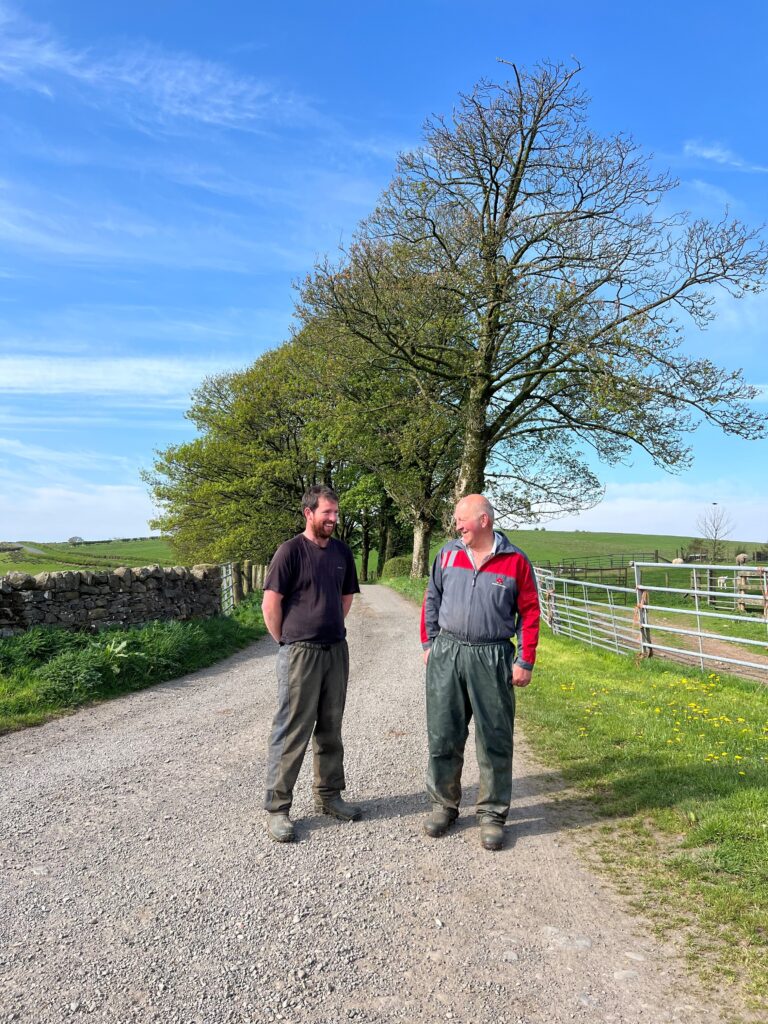
We visited Brockwoodlees Farm, 15 miles North of our Carlisle Food Hall to catch up with our long-term beef supplier David and his son Joe. David has been supplying beef to Cranstons for almost four decades and is known within the farming community for producing superb beef cattle.
We are very grateful for the work David, Joe and all our expert beef farmers put into providing superb cattle for Cranstons week in week out, it takes real skill to consistently to supply the quality of cattle we need.
Here’s what David had to say:
Q: How long have you been selling to Cranstons?
A: 38 years, that’s a lot of Sunday roasts and steaks!
Q: Have you always been a full-time farmer?
A: I’m a farmer, born and bred, however when I first started supplying Cranstons I lived in Laithes near Penrith and I also had a milk round. Over the years I have built the farm business up from being a part time farmer with rented lend, to a tenant farmer on the Duke of Buccleugh’s estate to owning the farm here at Brockwoodlees, Canonbie. It’s a journey I am very proud of. Cranstons have bought from me consistently throughout this time.
Q: Can you tell us a bit about the farm?
A: We farm 600 acres here at Brockwoodlees, just on the side of the A7 so many of your customers will have driven past us on the way up into Scotland. We produce around 900 cattle a year, supplying 16/17 cattle a week direct to independent butchers. Typically, we will have 400 cattle on the farm at any one time. We also have a flock of breeding sheep.
Q: How many cattle do you send to Cranstons?
A: Between 2 and 4 cattle a week. Stephen (Cranstons Master Butcher and Meat Buyer) lets me know weekly how many he needs.
Q: What sort of cattle do you keep?
A:
We buy ‘stores’ (young beef cattle) from local auctions, Carlisle, Longtown and South West Scotland and bring them back to the farm here to carefully feed them up and get them ready for Cranstons and the other independent butchers we sell to.
When we are looking for cattle to bring onto the farm here, we are looking for the ‘top end’ of the market as a plain animal will just not kill out to the standard your customers like. You like a Limousin or Angus cross predominantly and prefer Heifers (females). We also like a more compact animal so the end product, the joint or steak ‘eye’ is not too big. We look for young cattle with a good ‘confirmation’ (shape and muscle)- so they will produce a great carcass with plenty of meat coverage throughout their body and not too much fat.
As well as selecting the right animal, fattening cattle well requires a patient approach. The results will not be as good if they are pushed too hard.
Q: What do you feed them?
A: The cattle have lived outside on grass and suckled their mothers in the early months of their lives. It’s a very natural start for them. When they come to Brockwoodlees we house them in large, open sided barns, in straw bedded pens, where we patiently ‘feed them up’ with a mixture of silage and a cereal blend, containing barley, maize, and wheat.
Q: Who works on the farm with you?
A: I work alongside my son Joe who will take over one day. My wife Rosie and daughters Laura and Alice are big supporters too. It has always been a family affair and it’s much the same at Cranstons, where I’ve enjoyed working originally with Jimmy Cranston, then his son Roger, and have recently started working with Roger’s son James.
Q: What does it mean to be supplying some of the regions most renowned independent butchers
A:
As a farmer it’s great to work with people that really value the quality of the meat and whose skills further enhance it. Cranstons carefully dry age their hindquarters and are experts at preparing cuts from a carcass so the whole process from farm to counter is one of care and craftsmanship.
We care about our livestock and their comfort so it’s important to us that we can deliver them direct to the local abattoir in our own transport, far fewer miles and a less stressful experience for them than travelling all over the country.
Q: What do people often misunderstand about farming?
A: I don’t think a lot of people understand the husbandry care that goes into producing beef cattle. The only way you can get consistency in the texture and flavour is through looking after the cattle extremely well.
Q: What’s your proudest moment as a farmer?
A: I am proud to be working predominantly with independent butchers- no middlemen. It’s great to work closely together and that I get direct feedback all the time on the quality of the cattle .I enjoy people telling me they have had ‘a great roast’ or ‘a great steak’ from one of the cattle we have produced- it means we are doing it right!
Most of all I enjoy working alongside my son Joe, passing on the knowledge and skill I have gained over the years to him.
Q: And finally – got a favourite Cranstons product?
A: The topside and cheddar burgers or a rib eye steak at this time of year. And I love a roast of beef any time of the year.